Sector
Energy & utilities
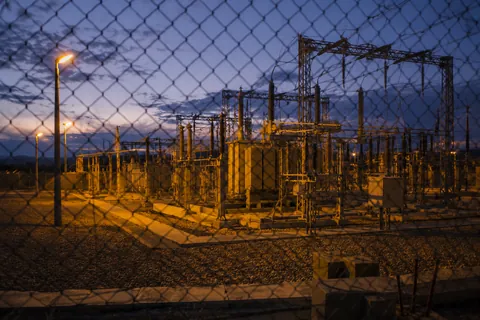
Most of these sites have nobody on them. A substation, a pump house, a solar field, a tower compound: visited monthly, watched never, and the nearest response is an hour away. We design and maintain security for energy and utility infrastructure across Maharashtra and beyond, specified for sites where nobody is coming quickly.
Most of these assets are unmanned most of the time, often remote, and classified as critical infrastructure. The system is not there to be watched: it is there to detect, verify and escalate without anybody present, which is a different design problem from a building.
What actually goes wrong
Unmanned means unnoticed, and the response time is the design constraint.
| What fails | Why it fails | What it costs |
|---|---|---|
| The alarm reaches nobody who can act | Routed to a control room an hour away, or to a number that changed. | The intrusion was detected, recorded and reported. Nothing happened for six hours. |
| Copper theft discovered at the next visit | Nothing monitors continuously, so the site reports monthly. | Weeks of exposure and no idea when it happened. |
| Connectivity drops and nobody notices | The link is the whole system on a remote site and nothing watches the link. | The site has been offline for a fortnight. The dashboard shows the last good frame. |
| Equipment fails in the environment | Heat, dust, salt, lightning. Specified from a catalogue rather than for the site. | Progressive degradation nobody sees, because nobody is there to see it. |
| Power for the security system taken from the site supply | No separate provision, because the site has power. | When the site loses power, the exact moment you need the system, the system is off too. |
| Vegetation triggers the perimeter until it is switched off | Detection never re-tuned after the site went live. | Half the sites in the estate have detection disabled and the drawings still show it working. |
Nobody is coming quickly
Detection is not the problem. What happens in the next ninety minutes is.
On a manned site, an alarm brings somebody in seconds. On a substation at two in the morning, an alarm brings a phone call, then a decision, then a drive. The gap between detection and response is the whole exposure, and no camera shortens it.
Which changes what the system has to do. It has to verify rather than just detect, because nobody is going to dispatch on an unverified alarm at 2am and the false-alarm rate decides whether anybody ever responds again. It has to deter locally, at the site, in the minutes before anybody arrives. And it has to still be working, unattended, in eighteen months.
Most remote-site systems we assess were specified as though somebody were there.
Check what my unmanned sites are actually doingWhat we carry here
- Surveillance and verification
- Perimeter, compound, equipment and access points
- Specified so an alarm arrives with an image, because nobody dispatches blind
- Health monitored centrally, so an offline site is known within the hour
- Intrusion & perimeter
- Detection zoned so an alarm names a location on the site
- Tuned after the site is live and re-tuned seasonally, so it stays switched on
- Local deterrence at the site, in the minutes before anybody arrives
- Power & continuity
- Security system supply independent of the site supply
- Battery and charging on a dated replacement schedule
- Because the system matters most at the moment the site does not have power
- Networking
- Connectivity monitored as part of the system, not assumed
- Recordings and logs held where somebody can answer for them
- Devices segmented so a remote site is not a route into the network
Fire and building management are specified where the site has occupied structures.
The same six stages
Two stages carry almost the whole design here.
- 01 Outside the gate Approach, standoff and detection. On an unmanned site this is where it is won or lost.
- 02 Entry A gate nobody is standing at. Every entry has to be authorised remotely or it is not authorised.
- 03 Inside the building The compound. Movement between equipment, which is short and matters.
- 04 Who goes where Maintenance crews, contractors, meter readers. All infrequent, all needing a record.
- 05 Work areas Control buildings and equipment rooms where these exist.
- 06 Control room Not on site. Somewhere else, watching many sites, and that is the design constraint.
Proof
The camera was watching the yard. The drivers get out on the other side.
A fuel site with cameras covering the parking apron and nothing covering the strip between the tankers, which is where drivers actually climb down, wait, and cook.
Every tanker entering is meant to be checked for a burner, a lighter, a box of matches. On a site where the whole risk is ignition, the search is the system, and it was being done by eye, at a gate, with no record that it had happened at all.
The fire detection was in. The lightning arresters had not been tested since the site was built, and nobody could produce a certificate for them.
The alley was dark, unwatched, and the one place on site where somebody with a match would go.
Year seven
An unmanned site degrades completely unobserved.
There is nobody to notice a camera fogging, a detector drifting, a battery dying or a link dropping. The monthly visit checks the plant, not the security system, and the person doing it is not a security engineer.
By the second year, an estate of forty sites typically has a handful that are recording nothing and a handful more that are offline, and no single event told anybody. The dashboard still lists all forty.
Find out what your unmanned sites are actually doing.
We assess the sites you nominate (every camera, detector, battery and link) verify that an alarm reaches somebody who can act, and give you a signed condition report per site. Yours whatever you decide next.
The assessment is chargeable, quoted against the site, and adjusted in full against the first year if you take cover. Where cover is not taken, the fee covers our team’s time on site and the report we leave behind, and the report is yours either way.
Chargeable, and adjusted in full if you take cover.
Book an assessment