AMC
You install. We maintain.
You install. We maintain. You keep the client, the relationship and the invoice, and we do the maintenance behind your name. It exists because installation is a good business and maintenance is a difficult one, and most firms who are excellent at the first end up trapped by the second.
What stops you taking my client
You should ask it, and you should not accept a reassurance. So it is written into the agreement rather than promised in a meeting.
A non-solicitation clause covering every client you introduce, for the term and for a defined period afterwards. We do not approach them, we do not quote them, and we do not accept work from them directly during that period. If we breach it, you have a contract to enforce rather than a grievance.
Beyond the paper, the commercial logic runs the same way. This channel only works if partners keep sending us estates. One poached client would be worth less than the partner who stops calling, and every other partner who hears about it. We are more exposed to breaking this than you are.
Who this is for
How it works
- You bring us the siteWe assess it first, the same way we assess any site. If a system is already failing we tell you before either of us commits to a service level on it.
- We price the cover to youYou present it to your client as your own service offering. The commercial terms between us are ours.
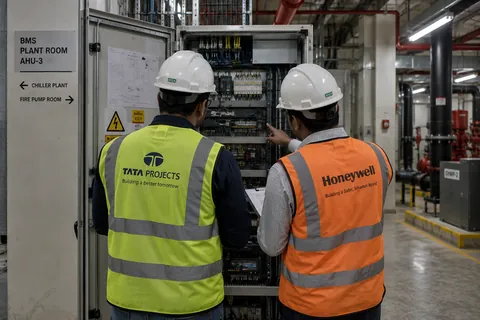
- Our engineers attend under your nameUnbranded or in your branding, as agreed. Reports are issued to you, in a format you can pass on or re-badge.
- You hold the client and the invoiceThey pay you, you pay us. The relationship stays yours and so does the revenue on top.
- Escalations come to you firstWe do not go around you. If a client asks us something commercial, the answer is that they should speak to you.
The terms
- Payment is not back-to-back. We invoice you and you pay on our terms, whether or not your client has paid you. This is the single most important commercial term in the agreement and it is not negotiable: a maintenance business cannot carry somebody else's receivables.
- We need access and records. Drawings, panel configurations and passwords for the sites you hand over. Where they do not exist, the assessment produces them and that has a cost.
- We will not service a system we have not assessed. Not a commercial preference. Taking a service level on an unknown system is how a partner channel earns a bad name in its first year.
- Small one-off sites do not suit this. The model works from an estate you can no longer service with the team you have upward. Below that, referral is a better arrangement for both of us.
Where we are with this
The first ninety days run as a pilot with five partners across Chunabhatti, Sion, Kurla, BKC, Lower Parel and Worli: a tight geography, so response times are real rather than aspirational while the model is being proved.
Common questions
The rung below
Tell us what you are carrying.
Roughly how many sites, and what systems they cover. We will tell you whether this suits you, and if it does not, we will say so. The first conversation is with Naman, not a salesperson.
The first conversation is with Naman.
Start a partner conversation